

Japanese single-bevel knife making is built around specialization: each knife is shaped for one job, whether that's slicing fish, breaking it down, or cutting vegetables. This guide covers the three single-bevel knives most chefs reach for first, what each is built to do, and how to pick a starting point.
At a glance
- Yanagi slices raw fish for sushi and sashimi in one clean pull.
- Deba breaks down whole fish and works through small fish bones.
- Usuba makes thin, even vegetable cuts and decorative work.
- Start with the one that matches what you cook most.
For an overview of Japanese knife types more broadly, see our Complete Guide to Japanese Knives.
1. Yanagi: Built for Slicing Fish and Sushi

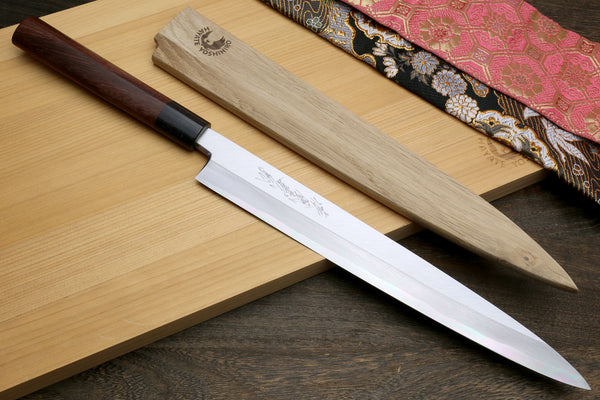
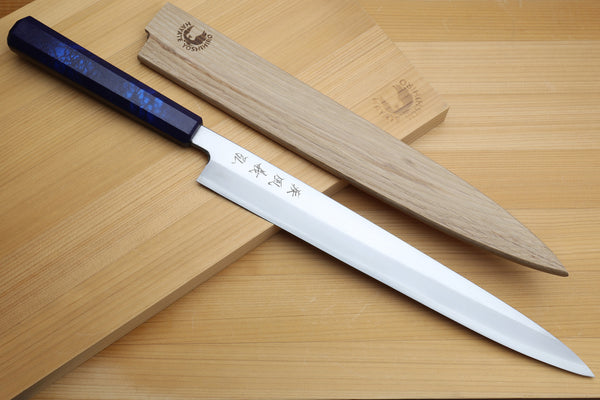
The Yanagi is the standard sashimi knife: a long, thin, single-beveled blade designed to draw through raw fish in one pull, which keeps the cut face clean and helps preserve texture. It's the knife most sushi chefs reach for, and it rewards practice — a longer blade takes more control to use well.
- Blade Length: Typically 270mm–330mm
- Blade Profile: Thin, narrow, single-beveled
- Best for: Slicing raw fish and sushi
- Suited to: Sushi work and sashimi prep
Why it matters: Clean, single-stroke cuts affect both texture and presentation, which is why the Yanagi is built the way it is. For a variant with a sword-like tip and a bit more weight for longer slicing and detail work, look at the Yanagi Kiritsuke.
Yanagi knives
View all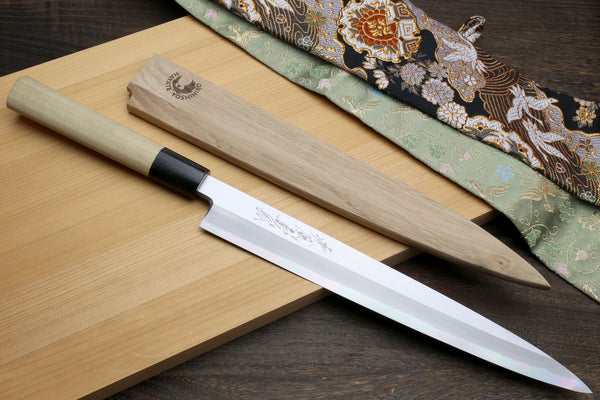
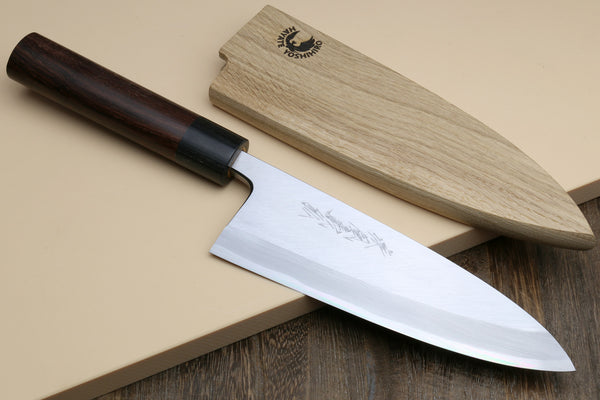
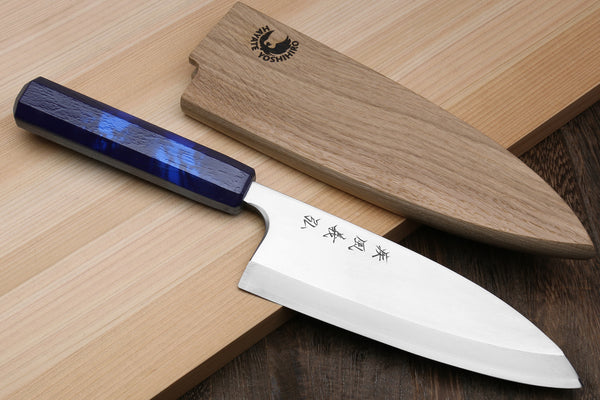
2. Deba: Built for Filleting and Breaking Down Fish

The Deba is the workhorse for anyone breaking down whole fish. Its thick spine and weight let it work through small fish bones and joints, while the sharp tip gives you control for precise filleting. It's not a general-purpose bone knife — save large animal bones and frozen food for a knife built for that, since pushing a Deba through them risks chipping the edge.
- Blade Length: 165mm–210mm
- Blade Profile: Thick and heavy compared to other single-bevel knives
- Best for: Filleting whole fish and cutting through small fish bones
- Suited to: Chefs and cooks who regularly break down fish
Why it matters: Between the weight and the geometry, the Deba is what makes breaking down a whole fish manageable instead of a fight.
Deba knives
View all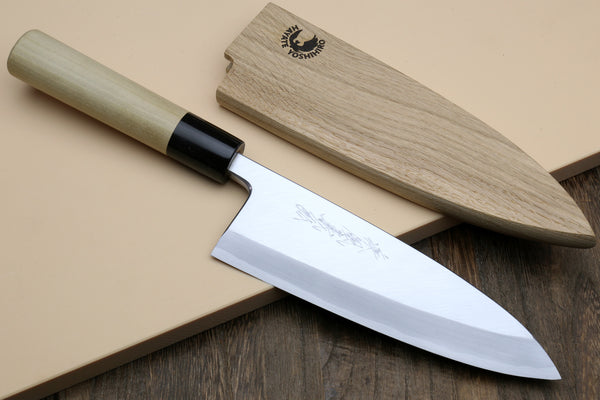
3. Usuba: Built for Precise Vegetable Cuts

The Usuba is a precision vegetable knife. Its tall, straight blade is built for thin, even slices and detailed decorative cuts, and the beak-like tip on the Kama-Usuba variation adds extra control for fine work.
- Blade Length: 165mm–210mm
- Blade Profile: Tall and flat, for straight cuts
- Best for: Slicing, peeling, and fine vegetable work
- Suited to: Vegetable prep and garnish work
Why it matters: If presentation matters or you're prepping a high volume of produce, the Usuba's straight, tall blade makes for cleaner, more consistent cuts. Two common variants: the Usuba Kama-gata, with a pointed tip for detail work, and the Edo Usuba, with a blunt tip better suited to heavy root vegetables and tasks like removing eyes from potatoes.
Usuba knives
View all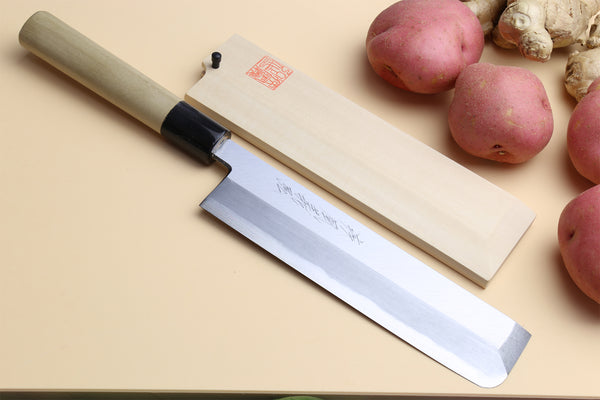 Yoshihiro Kasumi White Steel Edo Usuba Traditional Japanese Vegetable Chopping Chef Knife, Magnolia HandleFrom $239.99
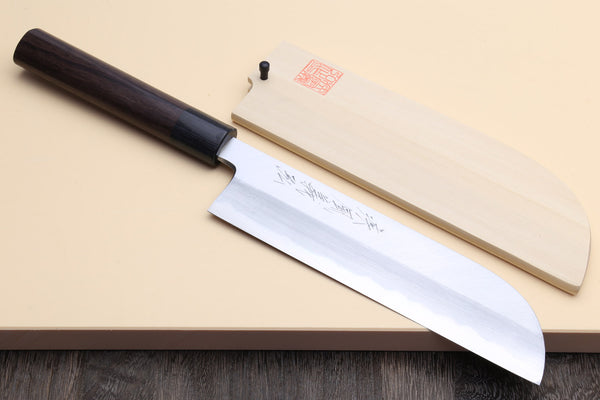 Yoshihiro Kasumi White Steel Kama Usuba Traditional Japanese Vegetable Chopping Chef Knife, Rosewood HandleFrom $249.99
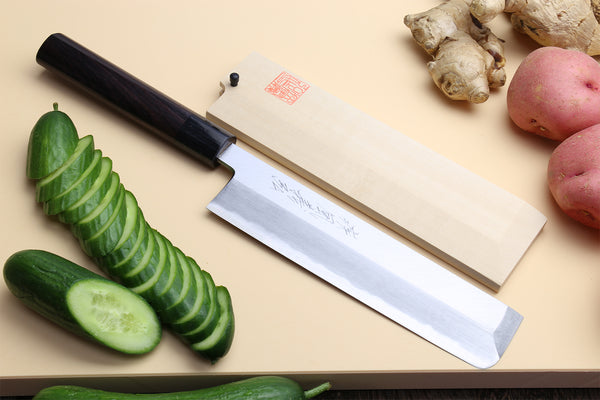 Yoshihiro Kasumi White Steel Edo Usuba Traditional Japanese Vegetable Chopping Chef Knife, Rosewood HandleFrom $289.99
Which One Should You Start With?
Each of these three knives is built for a different specialty.
| Knife | Blade length | Profile | Start here if you… |
|---|---|---|---|
| Yanagi | 270–330mm | Thin, narrow | Focus on sushi or sashimi |
| Deba | 165–210mm | Thick and heavy | Regularly break down whole fish |
| Usuba | 165–210mm | Tall and flat | Do precision vegetable work |
Single-bevel knives need a different sharpening approach than double-edged blades — see our sharpening guide before you put one to a whetstone for the first time. And whichever you choose, hand-wash and dry it right after use, and store it sheathed or on a guard — it's a thin, hard edge, so it deserves the same care regardless of which knife it's attached to.
Browse our full collection of handcrafted Japanese knives, whether you're building a first kit or adding a specialist blade to an existing one.


