High-carbon steel resists corrosion less than stainless — it can rust if it's left wet or unoiled. Light surface rust is usually easy to remove yourself. Deeper, pitted rust generally needs a professional.
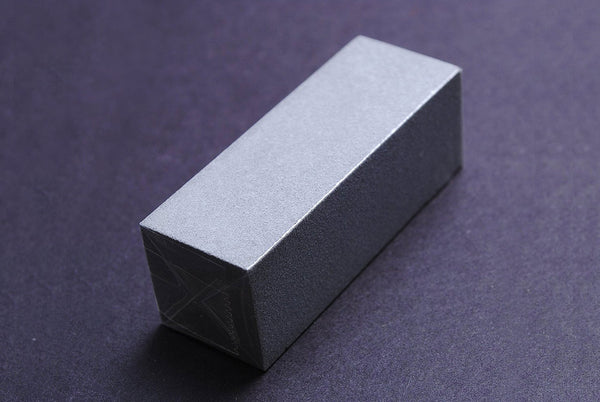
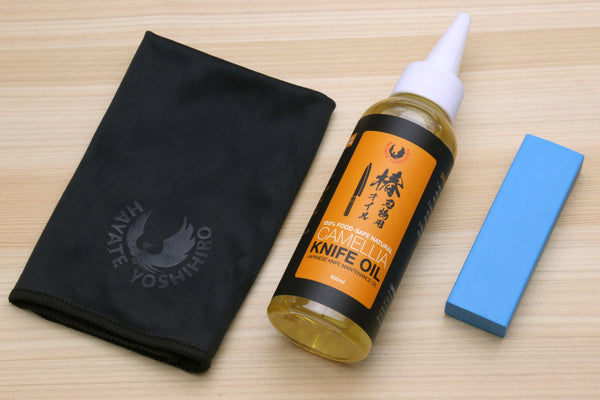
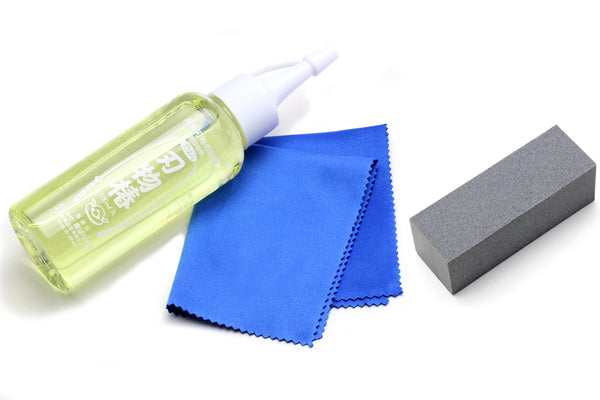
For surface rust, we recommend starting with our Rust Eraser and following up with Tsubaki Oil to protect the steel from further oxidation.
At a glance
- Light surface rust: rub it off with a dry Rust Eraser, along the grain, only on the rusted spots.
- Then protect it: a drop of Tsubaki Oil on each side, buffed in.
- Deep, pitted rust needs a professional sharpener to take the steel back to clean metal.
- Skip lemon, vinegar, and baking soda. They can scratch or etch the finish.
- Prevention is the routine: dry and oil a high-carbon blade after every use.
Why Knives Rust
Rust forms when iron in the steel reacts with moisture and oxygen. High-carbon steels — Blue Steel, White Steel, and similar alloys — are more reactive than stainless, especially if left wet or exposed to acidic foods like tomatoes or citrus without being wiped down.
Removing Light Surface Rust with a Rust Eraser
For light surface rust or discoloration, the Rust Eraser is built to work the rust off a blade without aggressive abrasives.
How to use it
- Cover the cutting edge with a towel — the blade is still sharp while you work.
- Use the eraser dry. Rub the rusted area gently in the direction of the blade's grain, usually lengthwise.
- Wipe away residue with a clean, dry cloth.
When Rust Goes Deeper
If rust has pitted into the steel rather than sitting on the surface, a rust eraser won't fully remove it. At that point, a professional sharpener can remove a thin layer of steel to get back to clean metal underneath. Regular drying and oiling is a lot less work than that kind of repair.
Protecting the Blade with Tsubaki Oil
Once the blade is clean, protect it from moisture. Our Tsubaki Oil is food-safe and works well on high-carbon steel.
How to apply it
- Make sure the knife is completely dry first.
- Apply a single drop of oil to each side of the blade.
- Spread and buff lightly with a clean microfiber cloth.
- Store the knife somewhere dry.

Stainless-Clad High-Carbon Knives Still Need Drying
Knives in our Kurouchi Black Forged Blue Steel series and similar stainless-clad lines are easier to maintain because most of the blade is protected by stainless cladding. But the cutting edge itself is exposed core steel and can still rust if it's not dried and oiled.
Dry the edge thoroughly after use, especially after cutting acidic foods, and apply a thin coat of oil before storing the knife for any length of time.

Why We Don't Recommend DIY Rust Removal
Lemon juice, vinegar, and baking soda are common suggestions online, but they can scratch, etch, or otherwise damage a blade's finish. A rust eraser made for cutlery removes rust without taking the rest of the finish with it.
Everyday Rust Prevention
- Hand wash and dry immediately after every use — never put a Japanese knife in the dishwasher.
- Don't leave the knife wet or soaking in the sink.
- Store it in a saya sheath or knife block rather than loose in a drawer, both to protect the edge and to keep the exposed blade out of the way.
- Oil high-carbon blades regularly, especially before long storage or in humid climates.
- Sharpen on whetstones rather than honing rods or pull-through sharpeners, which can chip a Japanese edge.
- Avoid cutting through bone, frozen food, or hard squash — high-hardness and single-bevel edges chip more easily under that kind of stress than a typical Western blade.
Maintenance Tools
- Tsubaki Oil + Rust Eraser Set (Standard Size)
- Tsubaki Oil + Rust Eraser Set (Large Eraser)
- Rust Eraser
- Sharpening Stones
Rust Removal & Maintenance FAQ
Can I use these products on other knife brands?
Yes. The Rust Eraser and Tsubaki Oil work on most high-carbon steel knives, not just ours.
How often should I oil my knife?
A light coat after each use is reasonable if you use the knife daily. If it's in storage for longer stretches, oil it at least once a week, more often in humid conditions.
Can I use these products on stainless steel knives?
Stainless is more rust-resistant, but oil can still help, especially around an exposed carbon-steel edge on a stainless-clad blade.
What's the difference between light rust and deep rust?
Light rust looks like surface discoloration or faint orange spotting and comes off with a Rust Eraser. Deep rust looks pitted or flaky and generally needs professional restoration.
Drying and oiling a high-carbon blade after every use is the actual maintenance routine, not a one-time fix. Stay consistent with it and you'll spend a lot less time dealing with rust down the line.
Knife oil and rust erasers
View all