

The chef knife is the tool most cooks reach for first. With a blade typically 7 to 10 inches long, it's built to handle nearly everything: chopping vegetables, breaking down proteins, carving roasts. One knife, most jobs.
At a glance
- The gyuto is Japan's chef knife: a curved edge for rocking cuts and an extended tip for fast, controlled chopping.
- It handles meat, fish, and vegetables — slicing, chopping, mincing, and carving.
- Steel sets the trade-off between edge, durability, and upkeep.
- Care: hand wash, dry immediately, no bone or frozen food, and sharpen on a whetstone.
What Makes the Gyuto Different
The gyuto is Japan's take on the Western chef knife, rooted in the country's sword-making tradition and known for taking — and holding — a fine edge. Its curved blade allows a smooth rocking motion, and the extended tip is useful for fast, controlled chopping.
Originally built for cutting meat (the name literally means "beef sword"), the gyuto has become one of the most versatile knives in the kitchen, handling fish, vegetables, and delicate prep work like sushi-grade fish or herbs.

Featured in this guide
From $479.99
What Makes a High-Quality Chef Knife
Material, shape, and balance are what separate a good gyuto from a mediocre one. At Yoshihiro Cutlery, we work with a range of steels, each with its own trade-offs:
| Steel | Trade-off |
|---|---|
| Carbon steel | Takes a very sharp edge and holds it well, but needs regular care to avoid rust. |
| Stainless steel | Resists corrosion better, but generally doesn't hold as fine an edge for as long. |
| VG-10 | A balance between sharpness and durability. |
| SG2 | Strong sharpness and edge retention in a stainless package. |
| ZDP-189 | Among the hardest steels used in kitchen knives, giving it excellent edge retention. |
For more on how different steels compare, see our steel guide. Blade shape matters too — Japanese knives are generally thinner and lighter than Western knives, which tend to be thicker and heavier for stability.

Featured in this guide
Yoshihiro VG-10 16 Layer Hammered Damascus Stainless Steel Gyuto Chefs Knife
From $144.99
Top Uses for a Gyuto
A gyuto covers a wide range of tasks: slicing soft ingredients like tomatoes, chopping harder vegetables like carrots and onions, mincing garlic and herbs, and carving roasts. The curved edge supports a smooth rocking motion for efficient chopping, and the extended tip gives you control for finer cuts.
How to Maintain and Sharpen Your Gyuto
- Hand wash with warm water and mild soap and dry it immediately — never put it in the dishwasher, and don't let it sit wet or soak in the sink, especially if it's carbon steel.
- Avoid bone, frozen food, and hard squash. That's a common way to chip an edge, particularly on harder steels.
- Sharpen on a Japanese whetstone rather than a pull-through sharpener, which can damage the edge instead of refining it.
- Store it safely in a block, on a magnetic strip, or in a protective saya cover so the edge isn't exposed to knocks in a drawer.

Why a Good Gyuto Is Worth the Investment
A well-made gyuto is a practical upgrade for any kitchen, beginner or professional. The right combination of steel, geometry, and craftsmanship makes everyday prep faster and more precise — and with the care outlined above, it's a knife you can rely on for a long time.
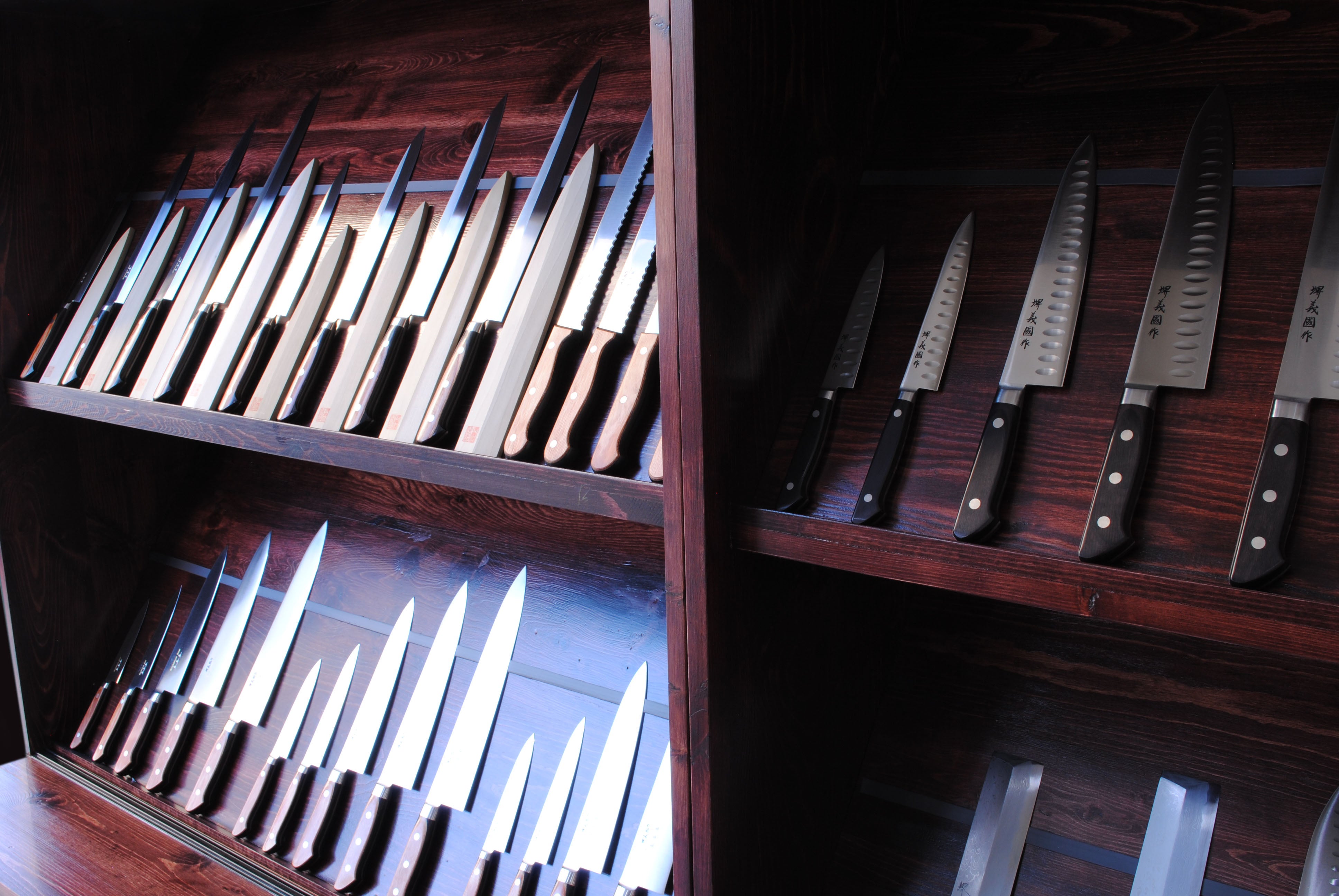
Gyuto knives
View all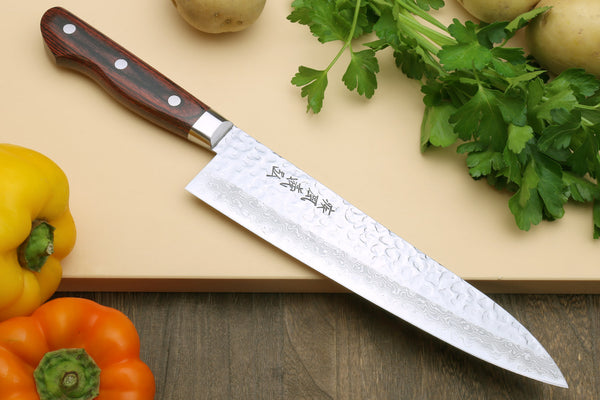 Yoshihiro VG-10 16 Layer Hammered Damascus Stainless Steel Gyuto Chefs KnifeFrom $144.99
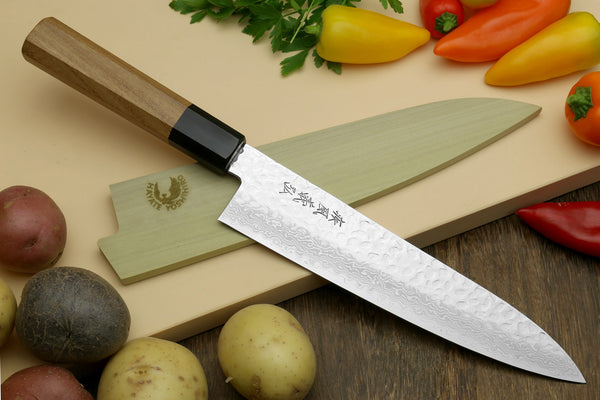 Yoshihiro VG-10 46 Layers Hammered Damascus Gyuto Japanese Chefs Knife (Octagonal Ambrosia Handle)From $174.99
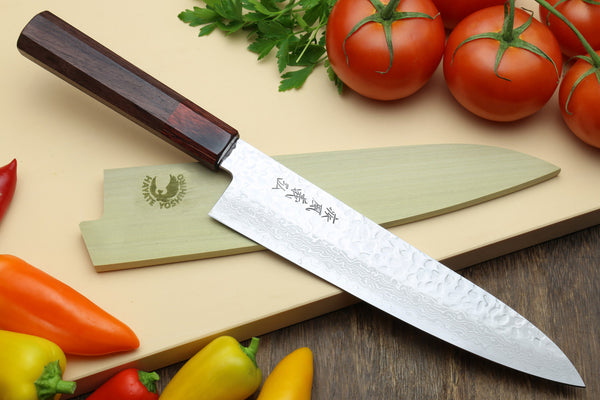 Yoshihiro VG-10 46 Layers Hammered Damascus Gyuto Japanese Chefs Knife (Octagonal Shitan Rosewood Handle)From $174.99


